


Introduction
The first 100 years of Christianity represent one of the most remarkable periods in human history. Against overwhelming odds, a small group of disciples carried forward the message of Jesus Christ, transforming it into a global movement that continues to shape lives today. These early Christianity beliefs, rooted in faith, perseverance, and the power of community, laid the foundation for what would become the world’s largest religion.
For modern believers in the United States and beyond, understanding this formative era provides not just historical perspective but also spiritual depth. By studying books about early Christianity and exploring Christian faith books, readers can connect the struggles and triumphs of the first Christians with the challenges of faith in the modern world.
The First 100 Years of Christianity: A Historical Overview
The first century of Christianity began in an environment that seemed almost impossible for a new faith to thrive. After Jesus’ crucifixion and resurrection, the remaining eleven disciples faced a hostile Roman Empire, skeptical religious authorities, and their own fears of persecution. Yet, this fragile movement not only survived but grew with extraordinary speed.
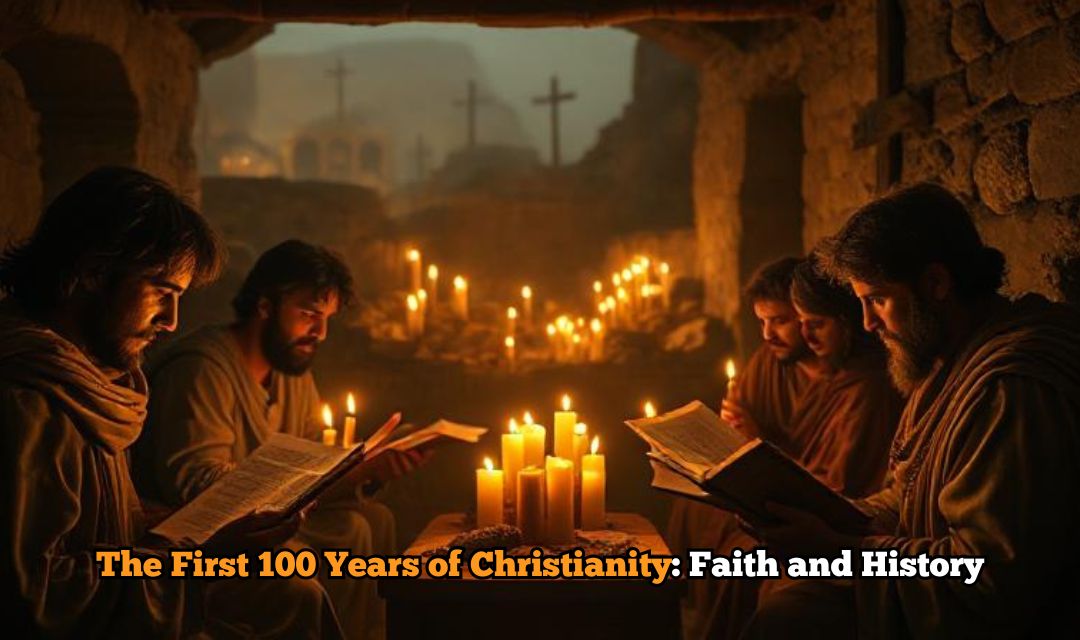
Christianity spread throughout early Rome, often in secret. House churches became centers of worship, and leaders like Peter, Paul, and John traveled widely to share the gospel. Despite fierce opposition, imprisonment, and even martyrdom, the message of Christ resonated with both Jews and Gentiles across the empire.
Historians often describe the first 100 years of Christianity as improbable from a human standpoint. But for believers, it was a clear act of God’s intervention. Jerry Scrivo, author of The Great Awakening: How GOD Reclaimed His Creation, highlights how this period represented the first great battle in the ongoing spiritual war between good and evil. Christianity’s survival and growth in the face of persecution was itself a testimony of divine power.
Early Christianity Beliefs and Practices
Understanding early Christianity beliefs helps modern readers appreciate how faith was lived out in uncertain times. The early church emphasized:
- Community and Fellowship: Believers gathered in homes to break bread, pray, and share resources.
- Sacraments and Rituals: Baptism and communion were central practices, symbolizing new life and remembrance of Christ’s sacrifice.
- Mission and Evangelism: The Great Commission motivated early Christians to spread the gospel, often at great personal cost.
The Role of Women in Early Christianity
An often-overlooked aspect of the first 100 years of Christianity is the role of women in early Christianity. Women served as patrons of house churches, deacons, and influential leaders in local communities. Figures like Priscilla, Lydia, and Phoebe illustrate how women helped sustain and spread the movement. Their contributions remind us that Christianity was not only countercultural in its theology but also in its inclusiveness.
Books About Early Christianity to Deepen Understanding
For readers eager to study this era, there are numerous books about early Christianity that provide historical, theological, and cultural context. These works help bridge the gap between the ancient world and today’s faith practices:
- The Great Awakening: How GOD Reclaimed His Creation by Jerry Scrivo
A powerful exploration of the cosmic battle between good and evil during the first 100 years of Christianity, showing how divine power enabled the church’s survival. - The Birth of the Church: From Jesus to Constantine (AD 30–312) by Ivor J. Davidson
A scholarly yet accessible overview of early church history and its key figures. - Early Christian Writings: The Apostolic Fathers (Penguin Classics)
Primary texts from early Christian leaders that provide firsthand insights into theology and daily life. - The Triumph of Christianity by Bart D. Ehrman
Examines how Christianity moved from a persecuted minority to a dominant religion in the Roman world. - Lost Christianities: The Battles for Scripture and the Faiths We Never Knew by Bart D. Ehrman
A study of diverse early Christian movements and how orthodoxy emerged.
Exploring these books on early Christianity allows believers to deepen their understanding of how faith endured under pressure and why its lessons remain relevant.
Christian Faith Books to Strengthen Modern Faith
While learning about the first 100 years of Christianity is essential, believers also seek guidance for living out their faith in today’s complex world. That’s where Christian faith books and Christianity books on faith play a vital role.
These works connect historical lessons with modern applications, offering encouragement, spiritual discipline, and practical wisdom. A few recommended titles include:
- Mere Christianity by C.S. Lewis – A timeless defense of the Christian faith.
- The Purpose Driven Life by Rick Warren – A guide to living with purpose rooted in biblical principles.
- Celebration of Discipline by Richard Foster – Insights on prayer, fasting, and other spiritual practices.
- The Great Awakening by Jerry Scrivo – Not only a history of early Christianity but also a call to recognize God’s presence in today’s ongoing spiritual battles.
By combining insights from Christian faith books with historical studies, believers gain a fuller picture of faith as both a historical legacy and a living, breathing journey.
Conclusion
The first 100 years of Christianity remain one of the most inspiring chapters in human history. Despite persecution, uncertainty, and overwhelming odds, the faith not only survived but flourished. The courage of early believers, the leadership of apostles, and the power of God’s Spirit ensured that Christianity became a global force for transformation.
For today’s Christians, exploring early Christianity beliefs is not merely an academic exercise. It is an invitation to rediscover the roots of faith and find strength in knowing that the same God who sustained the early church continues to guide believers today. Whether through books about early Christianity, Christian faith books, or engaging with works like Jerry Scrivo’s The Great Awakening, modern readers can bridge past and present, drawing wisdom from the first century to face the challenges of the twenty-first.