

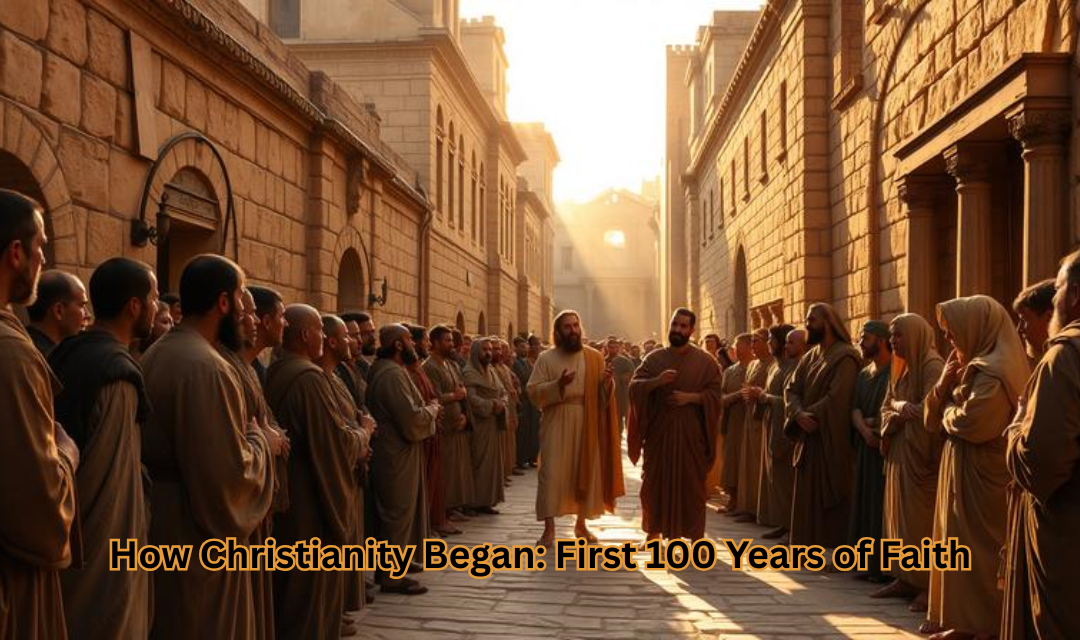
The first century of Christianity stands as one of the most transformative periods in human history. What began in a remote corner of the Roman Empire with a small group of frightened disciples eventually became a global faith that reshaped culture, politics, ethics, and civilization itself. The history of early Christianity, especially its first 100 years, is not just a story of growth but one of remarkable improbabilities—historically, culturally, and spiritually.
Understanding how Christianity emerged, survived, and expanded during this era is essential for anyone exploring the history of the Christian Church, the foundation of the Christian faith, or Christian faith books that bring this story to life.
The World into Which Christianity Was Born
Setting the Stage for the Rise of Christianity
Christianity did not emerge in a vacuum. Its birth took place within a complex, often hostile environment shaped by Roman politics, Jewish traditions, and Greek cultural influence. The Roman Empire brought order and roads, but also brutality. Judaism offered deep spiritual heritage but was fractured by competing sects—Pharisees, Sadducees, Essenes, Zealots—each interpreting God’s law differently. Meanwhile, Greek philosophy introduced ideas about ethics, virtue, and the soul that would later influence Christian thinkers.
In this turbulent landscape, the claims of Jesus of Nazareth—His teachings, miracles, crucifixion, and resurrection—were both disruptive and deeply compelling.
Political, Cultural, and Spiritual Landscapes of the 1st Century
- Political: Rome demanded loyalty and control; any new movement risked being labeled subversive.
- Cultural: Hellenistic (Greek) ideas shaped education, trade, and language, creating a multicultural environment where ideas spread rapidly.
- Spiritual: Many Jews longed for a Messiah; Gentiles explored mystery religions and philosophical schools. The hunger for spiritual meaning was undeniable.
This environment was uniquely suited for the Christian message—but it also created barriers that should have made the movement impossible to survive.
For a deeper timeline of early Christian beliefs, you may also want to read our article “The First 100 Years of Christianity: Exploring Early Christianity Beliefs, History, and Books on Faith.”
The True History of Early Christianity: What Happened After the Resurrection?
For the earliest followers of Jesus, the days after the crucifixion were filled with fear, confusion, and uncertainty. The movement appeared over. From a human standpoint, the story should have ended right then.
Yet something extraordinary happened.
Shock, Fear, and the Transformation of the Disciples
After the resurrection, the remaining disciples—ordinary men without status, training, or power—were transformed. They went from hiding behind locked doors to boldly proclaiming Christ across cities and continents. Historical evidence shows that almost every apostle died a martyr, choosing death over denying what they had witnessed.
Why the Movement Should Have Failed by Human Standards
- Their leader was executed publicly.
- They had no political influence.
- They were opposed by religious authorities.
- Rome viewed them as a threat to stability.
- They rejected common cultural norms, attracting hostility.
By every historical metric, Christianity should have collapsed within years—not ignited a global faith.
The First Christian Communities and the Birth of the Church
How the Earliest Gatherings Became the Christian Church
Early Christians met in homes, sharing meals, Scripture, and stories of Jesus’ teachings. These intimate gatherings eventually became something larger: the first expressions of Christian community and identity.
Church structure also began to emerge:
- Apostles provided doctrinal leadership.
- Elders and deacons oversaw local congregations.
- Traveling teachers and evangelists helped spread the message across regions.
Leadership, Worship Practices, and Early Struggles
The first church faced challenges that tested its unity and purpose:
- Debates over Jewish law
- Persecution from religious authorities
- Cultural tensions between Jewish and Gentile converts
- Geographic separation across the Roman Empire
Still, the message remained consistent, forming the foundation of what we now recognize as the history of the Christian Church.
To better understand early faith formation, see “Christian Faith Books: Growing Your Faith Through Christianity Books on Early Beliefs and Church History.”
A Faith That Should Not Have Survived: Why the Rise of Christianity Was ‘Improbable’
When examined through historical, sociological, and political lenses, the rapid rise of Christianity is an anomaly.
Persecution
Early Christians were arrested, tortured, and executed for refusing to worship Roman gods. Yet persecution often accelerated the spread of the faith.
Lack of Political Power
Unlike other movements, Christians had no political backing. Their only “strategy” was to preach, live ethically, serve the poor, and remain steadfast in faith.
Social Resistance
Christian teachings challenged just about every norm of ancient society:
- Equality before God
- Value of women and children
- Care for the poor and marginalized
- Forgiveness over vengeance
These ideas were revolutionary—and disruptive.
From a human standpoint, Christianity surviving even 50 years seems unlikely. Surviving 100 years—and becoming a global force—is statistically astonishing.
God at Work: Divine Intervention in the First 100 Years
This is where historical analysis and spiritual understanding converge.
The Cosmic Battle Between Good and Evil
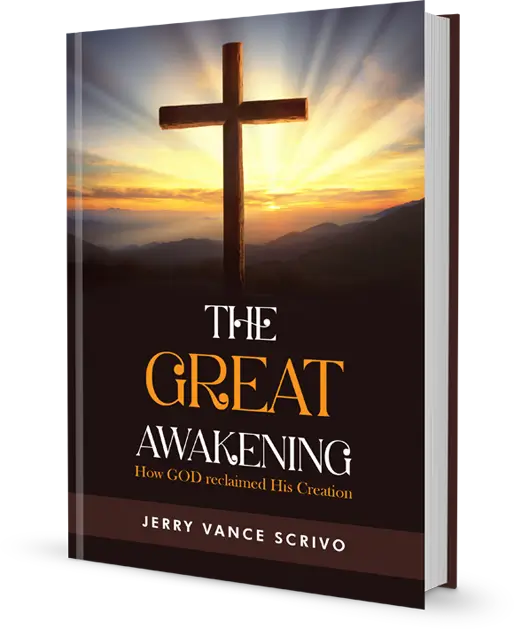
As Jerry Scrivo’s book The Great Awakening: How GOD Reclaimed His Creation emphasizes, the early church was not just expanding socially—it was stepping into an active spiritual conflict. Christianity’s survival reflects something deeper than human strategy: a divine purpose unfolding within a world filled with opposition.
How God Used Ordinary People to Accomplish Extraordinary Growth
The first century church was built by:
- Fishermen
- Tax collectors
- Merchants
- Tentmakers
- Women of influence
- Slaves and freedmen
None were elites. Yet all became instruments of a movement that reshaped history.
This improbable growth aligns with Scripture’s theme: God uses the unlikely to accomplish the extraordinary.
Recommended Christian Faith Books for Understanding Early Church History
If you want a deeper, more faith-centered exploration of early Christianity, consider the following Christian faith books:
1. The Great Awakening: How GOD Reclaimed His Creation — Jerry Scrivo
A compelling historical and spiritual analysis of the first 100 years of Christianity, highlighting the cosmic battle between good and evil and the divine forces behind the church’s unexpected rise.
2. The Rise of Christianity — Rodney Stark
A sociological explanation of why Christianity grew despite significant barriers.
3. The First 100 Years of Christianity — Ussher & O’Malley (various editions)
Historical analysis of early church formation.
4. The Early Church — Henry Chadwick
A classic introduction to church history, ideal for new learners.
Conclusion: Why Understanding the History of Christian Faith Still Matters
The first century of Christianity is more than a historical subject—it’s a blueprint for today’s believers. The early church grew through faith, courage, unity, and divine guidance. These lessons matter now more than ever.
For Christians navigating modern challenges, understanding the history of Christian faith offers clarity, direction, and hope. It reminds us that God works through ordinary people, and that the spiritual battle that shaped the early church continues today.
By exploring this history through Scripture, scholarship, and Christian faith books like The Great Awakening, readers gain a deeper appreciation of how God’s hand shaped one of the most improbable—and impactful—movements in human history.